The weird, the wild, the WTH…every month, we’re sharing the industry observation, marketing mystery, or growth dilemma that gets our team fired up.
This Month: What it Takes to Build Community
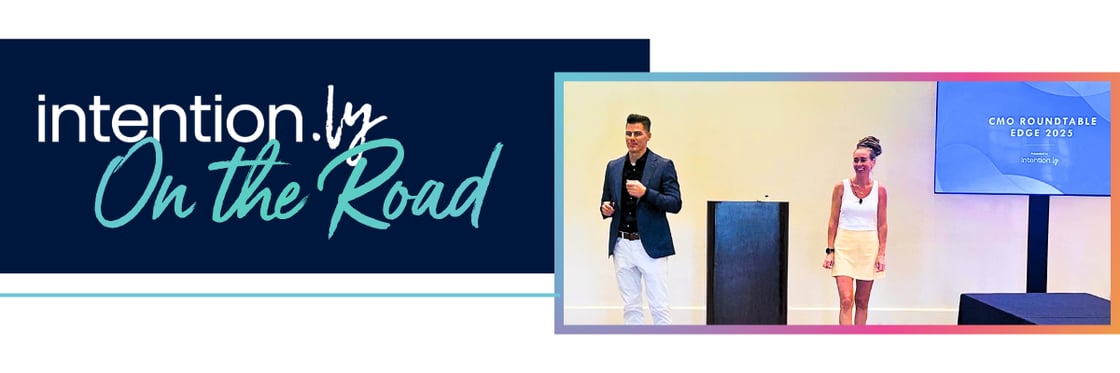
At Future Proof Festival two weeks ago, we brought together more than 100 of our industry’s brightest marketing minds in The Blue Room at the Pasea Hotel in Huntington Beach for the CMO Collective.
It’s the community financial services marketers tell us they’ve been starving for.
Why we started The CMO Collective
For years, financial services has built strong communities around advisors, CEOs, investment professionals, operators and technology leaders. Marketing leaders haven’t had the same experience. The gap has existed for a long time, even as the job itself has become significantly more demanding.
Marketing leaders today touch nearly every corner of the business: marketing, sales, business development, client experience, retention, strategic partnerships, internal communications, PR, centers of influence, referrals, client sentiment and brand.
Increasingly, they’re also being asked to lead conversations around technology and AI, helping determine how new tools should integrate into the business and where they can create real operational efficiency.
Through all of it, they still have to show tangible progress to answer the question: Is all of this helping the business grow?
The role has expanded dramatically. The community and peer infrastructure supporting the people doing that job needed to catch up. That was a big reason we created The CMO Collective.
Two years into the journey, a few lessons have become especially clear.
1. An audience and a community are very different things
It’s relatively easy to build an audience: publish content, host events, send emails. You speak, and people listen.
An audience becomes a community when people stop coming primarily to hear from you and start coming to learn from each other.
Some of the best moments we saw last week had nothing to do with Intention.ly. They were marketers sharing ideas across a table, comparing approaches to a problem or introducing one another to someone who could help.
That’s the point. The more useful the relationships become between members, the stronger the community becomes.
2. Start with the shared problem, not the platform
It’s easy to become overly focused on the mechanics. Do we need an app? A forum? More events? More content? More programming?
The infrastructure matters, but the value of a community is in that the people inside it are wrestling with many of the same questions. How do we demonstrate marketing’s contribution to growth? How do we differentiate in an industry where so many firms sound the same? How should we think about AI? Where should we invest in technology?
The stronger the shared challenges, the stronger the reason to stay connected.
3. Trust is the most valuable currency in a shifting industry
The most authentic communities create an environment where people are comfortable admitting they don’t have everything figured out, where the meat of the conversation is some variation of:
Here’s what we tried.
Here’s what worked.
Here’s what didn’t.
Here’s what I’m struggling with right now.
Candor is more useful than any polished success story, but it’s only possible when people trust the room, when people aren’t constantly being sold to, and when there’s genuine respect for the experience each person brings.
You earn that trust over time.
4. Good programming creates organic conversation.
One of the easiest mistakes to make is assuming that more programming automatically creates more value.
More speakers. More webinars. More panels. More content. We’ve learned that sometimes the better approach is simply to introduce an important question, put interesting people in the room together, and give them space to explore it. At Future Proof, the discussions on stage were valuable, but the energy and insights around the tables were just as important.
5. In-person moments still matter enormously.
There’s a lot we can do digitally to keep people connected throughout the year, but there’s still something irreplaceable about getting people together in the same room: deeper conversations, stronger connections, and the kind of bonds that can’t be formed via LinkedIn messages.
Then, when everyone returns home, the digital community becomes more valuable because there’s now a real relationship behind the profile photo.
Looking ahead
Two years into building the CMO Collective, we’ve figured out that building a community is never finished. Our job isn’t to have all the answers. It’s to keep creating the conditions where smart people can help one another find better ones.
If you’d like to be part of the CMO Collective, download our recently launched app to connect with a network of industry-leading marketers, access exclusive content, share your own experiences, and more.
Apple | Google Play